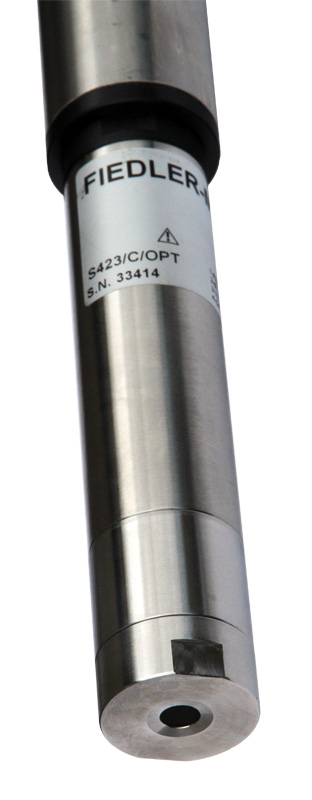
Optical sensors do not require regular calibration; there is no need to replace the electrolyte or chemically clean a worn anode, and they do not require the solution to flow around the measuring head, since they do not consume any oxygen atoms during measurement.
The sensors are placed in the measured medium at an angle (30 to 45 degrees) to prevent the accumulation of gases on the surface of the luminescent measuring head (the angle prevents the formation of air pockets near the phosphor). The ESKO12 sensor is available in a rod-mounted or suspended version.
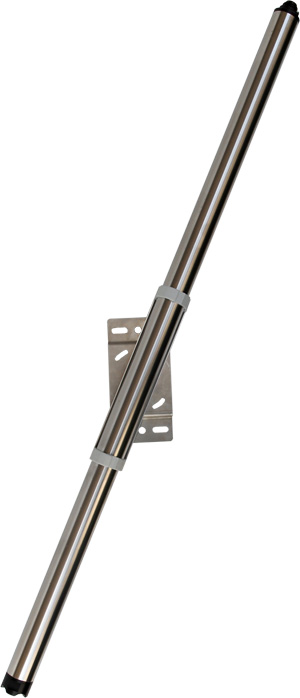
The rod-mounted sensor can be easily installed using the DE2 bracket on the railing of the activation tank or on the edge of the tank. The DE2 bracket consists of two parts and, in addition to adjusting the angle, also allows the sensor to be moved within the bracket—for example, to accommodate the current water level or to clean the sensor of coarse debris.
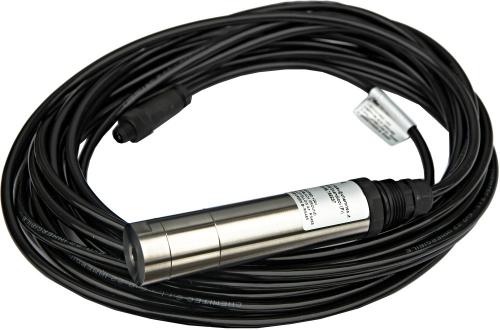
The suspended sensor comes standard with a 10-meter cable fitted with a 5-pin M12/5F industrial connector at the end. When suspending the sensor by the cable, it is also necessary to ensure that the sensor is positioned at an angle so that air bubbles do not accumulate on the measuring head of the S423 sensor.