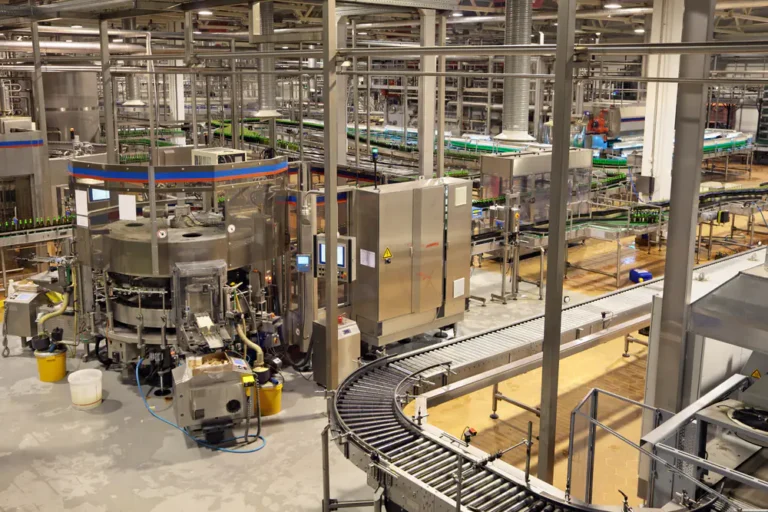
Environmental Monitoring in Industrial Buildings

In production facilities, laboratories, warehouses, and other operations, it is important to maintain stable and regulated microclimatic conditions. FIEDLER AMS offers solutions for continuous environmental monitoring and control.

Continuous measurement
Temperature, humidity, and airflow, with the option to add CO₂, lighting, or differential pressure
Flood detection
Caused by a water leak or an air conditioning malfunction
Wireless communication
NB-IoT, GSM/GPRS – can operate even without mains power
How it works

How It Works

The system monitors microclimatic conditions and also records operational statuses (heating elements activated, fans running, inlets open). It can be expanded to include automatic temperature and ventilation control. The data is visualized in CloudFM.

Where to Use It • Warehouses, production facilities, and laboratories • Pharmaceutical manufacturing and storage • Food production • Air-conditioned and cleanroom facilities • Work with biological samples

Software

CloudFM – A GOOD APP IS ESSENTIAL

The app is connected to devices that collect and analyze data from the environment; this data is then uploaded to a server and archived in a database that users can access via a web browser. The app processes all measured data, which it then converts into statistics; as a user, you can view this data in a visually appealing format through graphs and tables, and you can customize the entire interface to suit your exact needs —including visual customization, changes to operating parameters, form creation, and more. CloudFM provides you with a comprehensive overview and full control over your work environment. The application also supports exports to several data formats. All of this operates within an easy-to-use interface that you can manage from a computer, smartphone, or tablet.


Application

Environmental Monitoring in Industrial Buildings

The web application allows users to continuously monitor temperature, humidity, airflow, and other environmental parameters in industrial facilities. It displays the measured data in clear graphs and tables and alerts users when preset thresholds are exceeded. The system can also be expanded to include automatic temperature and ventilation control or flood detection.

Devices

Related products

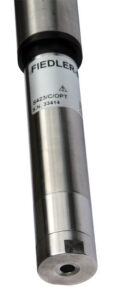
ESKO12 - Optical Dissolved Oxygen Sensor

The ESKO12 sensor operates on the principle of measuring the intensity of radiation on the luminescent layer of the sensor’s measuring head, which is triggered by a short, high-energy light pulse generated by the sensor’s electronics. Oxygen atoms absorb the pulse energy that would otherwise be emitted as photons by the phosphor atoms; therefore, the concentration of dissolved oxygen in the measured solution is inversely proportional to the measured intensity of the luminescent radiation. The sensor also regularly measures the intensity of low-energy light reflected from the phosphor (which does not induce luminescence) and uses this measured value for the sensor’s self-calibration.

View
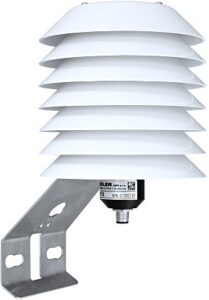
RVT12 - Relative Humidity and Air Temperature Sensor

The RVT12 sensor is designed for highly accurate measurement of relative humidity and air temperature in meteorological and environmental applications. It uses the precise HygroClip2 probe, which is known for its high stability and long-term reliability. The measured values are transmitted via analog outputs, allowing for easy connection to telemetry units and data loggers.

View
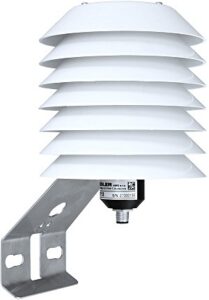
RVT13 - Relative Humidity and Air Temperature Sensor (with built-in microprocessor)

The RVT13 sensor is designed for highly accurate measurement of relative humidity and air temperature. It uses the HygroClip2 probe, which ensures stable and consistently accurate measurements over the long term. The measured values are processed by an internal microprocessor and transmitted via RS485 digital communication, allowing for easy integration into telemetry systems.

View
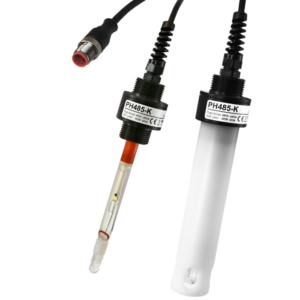
PH485 - Probes with RS485/Modbus RTU Output

The PH485 probe features a combination pH electrode with partial self-cleaning capability and an extended service life. The self-cleaning design of the electrode ensures a stable and reproducible signal even in environments containing emulsions, suspensions, and other adhering contaminants of various origins, as well as contaminants caused by chemical reactions. The electrode thus largely eliminates, for example, the negative effects of rust, hard water (Ca and Mg compounds in both carbonate and sulfate forms), oil emulsions, adhering organic and inorganic contaminants that form layers, and so on. The mechanical design of the PH485-K probe with a fixed cable is optimized for easy and quick installation of the probe in piping or in free-flowing streams. The PH485-M12 probe, equipped with a connector, is primarily intended for installation in the TS500 rod-type sensor and for industrial applications.

View
Recommended for you

You might also be interested in

Contact

Have a project or a question?

Free consultation - our specialists will help you choose the right solution for your project.