Electrochemical probes series 485

PH485 – Probes with RS485/Modbus RTU Output

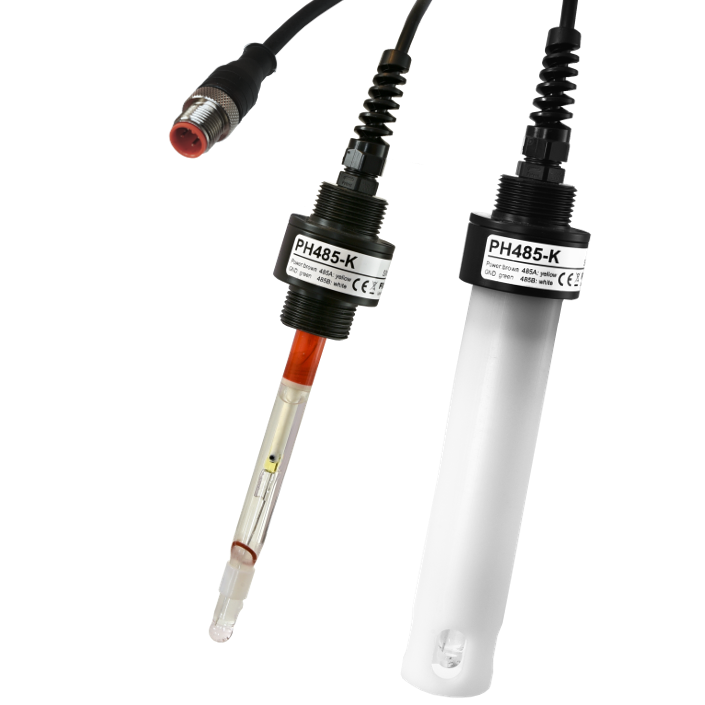
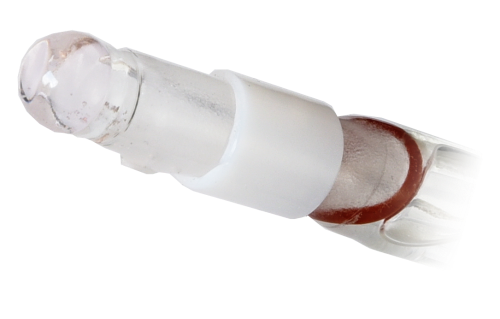
The PH485 probe features a combination pH electrode with partial self-cleaning capability and an extended service life. The self-cleaning design of the electrode ensures a stable and reproducible signal even in environments containing emulsions, suspensions, and other adhering contaminants of various origins, as well as contaminants caused by chemical reactions. The electrode thus largely eliminates, for example, the negative effects of rust, hard water (Ca and Mg compounds in both carbonate and sulfate forms), oil emulsions, adhering organic and inorganic contaminants that form layers, and so on. The mechanical design of the PH485-K probe with a fixed cable is optimized for easy and quick installation of the probe in piping or in free-flowing streams. The PH485-M12 probe, equipped with a connector, is primarily intended for installation in the TS500 rod-type sensor and for industrial applications.

  • Reliable and accurate pH measurement without additional transducers or other electronics
  • A key component for creating an RS485 sensor network for PLCs, data loggers, and online IoT systems (LoRa, Sigfox, NB)
  • Calibration coefficients stored in the probe
  • Measurement ranges: 0 to 13 pH; -10 to +60 °C
  • Self-cleaning reference electrode design
  • Service life of 2 to 3 years with extended recalibration intervals (typically 1 year)
  • Automatic temperature compensation
  • Galvanically isolated communication and power circuits from the pH electrode itself
  • Wide supply voltage range from 5 to 24 V DC, low current consumption
  • Low purchase price
  • Variant probe models for measuring redox potential (ORP485) and the voltage of ion-selective electrodes (ISE485)

Description

The PH485 probe contains measurement electronics within its housing that, among other things, perform automatic temperature compensation of the measured pH value and transmit the measured values to a connected host system via the RS485 bus.
To prevent the measured value from being affected by ground currents and induced interference potentials in the probe’s supply line, the measuring circuit—including the electrode itself—is galvanically isolated from the probe’s communication and power cables inside the probe.

Applications

  • Water treatment plants and wastewater treatment plants
  • Chemical and food industries
  • Agriculture
  • Research and development projects
  • Environmental monitoring

Technical specifications

Technical Specifications PH485 - Probes with RS485/Modbus RTU Output
pH electrode combined self-cleaning, gel electrolyte, increased mechanical resistance
pH Measurement Range 0.00 to 13.00 pH
Measurement Accuracy (pH Measurement Range) ±0.1 pH
Temperature measurement range -5.0 °C to +60.0 °C
Measurement accuracy (temperature measurement range) ±0.5 °C
mV measurement range -1000.0 to +1000.0 mV
Measurement accuracy (mV measurement range) ±2 mV
Warm-up time for a new probe < 10 sec
Typical recalibration interval 1 year
PH485-K connection PUR cable 4x0.34; 3 m long, terminated with ferrules without connectors
PH485-M12 connection M12 connector, 4 pins (male), IP67
Interface RS485, Modbus RTU protocol /*
Galvanic isolation 500 V between the cable/connector and the measuring electrode
Supply Voltage 5 to 24 V DC
Current Consumption < 20 mA
Service Life 2 to 3 years, depending on the composition of the measured medium
Storage temperature 0 °C to 60 °C
Maximum operating pressure 1 bar (up to 10 bar upon agreement with the manufacturer)
Dimensions maximum diameter 40 mm, length 170 mm (other electrode lengths available)
Housing mounting thread G3/4”
Housing material POM
Weight including cable 100 g
Protection rating IP68 (PH485-K), IP67 (PH485-M12)

Non-binding inquiry

PH485 – Probes with RS485/Modbus RTU Output


    Contact

    Have a project or a question?

    Free consultation - our specialists will help you choose the right solution for your project.